
“HER2CLIMB-05 has demonstrated that the addition of tucatinib to HP represents an enhanced frontline maintenance therapy option for patients with HER2-positive metastatic breast cancer,” said Erika Hamilton, MD.
“HER2CLIMB-05 has demonstrated that the addition of tucatinib to HP represents an enhanced frontline maintenance therapy option for patients with HER2-positive metastatic breast cancer,” said Erika Hamilton, MD.

The primary end point of PFS was not statistically significant with sacituzumab govitecan vs chemotherapy as first-line treatment in HR+/HER2– metastatic breast cancer.

Giredestrant’s safety in the lidERA BC trial was consistent with its known profile, with a lower discontinuation rate vs SOC endocrine therapy.

Axillary dissection was more likely to be omitted among patients in the ALTERNATE trial when there was one positive sentinel node compared with 2 or more.

Paolo Tarantino, MD, and Matteo Lambertini, MD, PhD discuss findings related to CDK4/6 inhibitors and antibody drug conjugates presented at SABCS 2024.
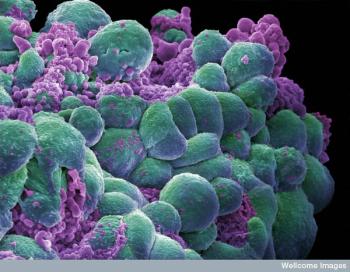
A phase 1/2 study showed that treatment with cyclophosphamide, SV-BR-1-GM, and retifanlimab yields favorable survival data in heavily pretreated patients with breast cancer.

Broader margins used in lumpectomies can lead to a reduced radiation target area in patients with breast cancer, according to results from a study presented at the 2024 SABCS.
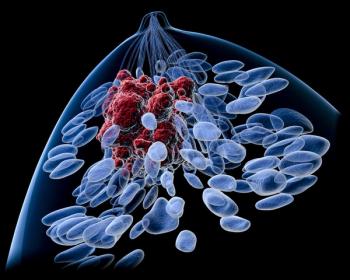
Ivonescimab with chemotherapy elicited a median progression-free survival of 9.36 months in patients with locally advanced unresectable or metastatic triple-negative breast cancer.

Phase 1b/2 data show antitumor activity with zanidatamab/evorpacept, including among heavily pretreated patients with HER2-low metastatic breast cancer.

Phase 2 data indicate that CD8 status may serve as a biomarker for predicting treatment efficacy with tislelizumab-based treatment in TNBC.
The FITWISE clinical trial assessed the safety and tolerability of breast cancer treatments when patients use tirzepatide.
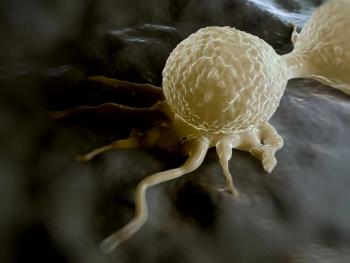
The first stage of a phase 2 trial evaluating neoadjuvant SHR-A1811 in breast cancer meets its primary end point of ORR.

LumiSystem prompted the removal of a median of 10.5cc extra tumor margin tissue in patients with breast cancer and did not significantly affect satisfaction outcomes.

Data from a phase 1b/2 study show a 78.6% ORR in patients with metastatic triple-negative breast cancer treated with PM8002/BNT327 plus nab-paclitaxel.
Performance status, age, and comorbidities may impact benefit seen with immunotherapy vs chemotherapy in patients with breast cancer.

The phase 3 ZEST trial discovered that, with low ctDNA at baseline, the recurrence-free interval is longer for patients with triple-negative breast cancer.

SABCS 2024 saw a variety of potentially practice-changing findings on novel antibody drug conjugates, biomarker data, and surgical interventions.
Multiple targeted therapies/sequencing possibilities are available following elacestrant’s approval for patients with breast cancer, Maxwell Lloyd, MD, said.
Since elacestrant’s emergence in the real-world setting, it has demonstrated superior efficacy outcomes compared with what the EMERALD study found.
Updated results from the 1b/2 ELEVATE study elucidate synergizing effects observed with elacestrant plus targeted therapies in ER+/HER2– breast cancer.

Patients with ER+/HER2– advanced breast cancer saw positive efficacy and safety data following treatment from the SERENA-1 trial.
Patients with ESR1+, ER+/HER2– breast cancer resistant to chemotherapy may benefit from combination therapy with elacestrant.

Ultra-sensitive ctDNA testing identified ctDNA at baseline in patients with HR–positive breast cancer, results from the PELOPS trial showed.
Atezolizumab with chemotherapy did not yield a significant increase to event-free survival compared with placebo with chemotherapy, 85.2% vs 81.9%, respectively.
Of 18 patients with BRCA-mutated ER+/HER2– breast cancer, 3 had a pathological complete response when treated with niraparib plus dostarlimab.

The phase 3 CamRelief study reported a pathologic complete response rate of 56.8% for camrelizumab plus chemo compared with 44.7% for chemo alone.
Data from the RIGHT Choice study showed that ribociclib/ET yielded efficacy benefits for luminal B/HER2E breast cancer vs combination chemotherapy.
Palbociclib combination therapy elicited a progression-free survival of 44.3 months compared with the 29.1 months of SOC in HR+, HER2+ breast cancer.
Data from the EMBER-3 trial showed improved progression-free survival with imlunestrant with or without abemaciclib vs SOC in ER+/HER2– breast cancer.