





Brain Cancer
Latest News
Advertisement
Latest Videos
Shorts
0:54
How Does Vorasidenib Impact the Tumor Microenvironment?
4 months ago
by
Timothy F. Cloughesy, MD

0:55
Personalized Vaccine/Pembrolizumab: The ASCO Abstract to Watch in Glioblastoma
5 months ago
by
Sonikpreet Aulakh, MBBS, MD
0:56
The Excitement Brewing Around Plixorafenib in BRAF-Altered Cancers
5 months ago
by
Macarena de la Fuente, MD

1:01
Exploring The Applicability of Scorpion Venom in Glioblastoma Treatment
a year ago
by
Michael Barish, PhD

0:54
EVA1-Targeting ADCs May Reduce AEs vs Anti-CD133 Agents in Glioblastoma
a year ago
by
Toru Kondo, PhD
Podcasts





























































Advertisement
More News

Peter Forsyth, MD, discusses a first-in-human trial of intrathecal dendritic cell therapy for leptomeningeal disease from breast cancer.
The FDA has approved a FET-PET imaging agent, to help characterize recurrent or progressive glioma from treatment-related changes.

The first patient has been dosed in a phase 2 trial evaluating paxalisib plus gemcitabine in children and young adults with recurrent atypical teratoid/rhabdoid tumor.

New CNS metastasis data link gabapentin to fewer brain mets, spotlight trial barriers, and show promise for intrathecal therapy and osimertinib.

Josef Vymazal, MD, DSc, discusses a prospective study comparing delayed single- and double-dose gadopiclenol MRI for detecting small brain metastases.

Lizza Hendriks, MD, PhD, discusses clinical trial designs, multidisciplinary care, and promising research at the 2026 SNO ASCO CNS Metastases Conference.
Lizza Hendriks, MD, PhD, discussed why excluding patients with brain metastases from clinical trials is no longer ethical.

The next major problem to tackle for SRS in brain metastases management is how to handle necrosis rates, according to Ayal Aizer, MD, MHS.

The FDA granted fast track designation to safusidenib for IDH1-mutant glioma, building on updated phase 2 data and a broadening clinical development program.

This analysis demonstrated that the prognostic effect of age was predominately attributable to its association with molecular risk factors.

The primary end point of PFS-6 was met in the phase 2 NEO100-01 trial assessing NEO100 in patients with grade III/IV IDH1-mutant glioma.

Learn how to evaluate the data for recent advancements in immunotherapy, targeted therapy, and other modalities in the treatment of patients with glioma.

TRIDENT failed to show an OS benefit for TTFields started during chemoradiation vs the maintenance-phase approach in newly diagnosed glioblastoma.
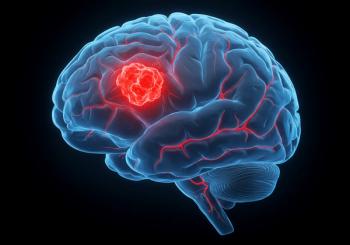
Updated NCCN guidelines for CNS cancers now recommend CSF-based tumor-derived DNA testing for patients with biopsy-infeasible high-grade glioma or glioblastoma.

Early interim data from the 3 patients with recurrent glioblastoma showed 100% local disease control and a 67% complete response rate with Alpha DaRT.

Catch up on major clinical trials reshaping treatment for brain metastases, Merkel cell carcinoma, cervical cancer, and head and neck cancer, all from ASCO 2026.
Timothy F. Cloughesy, MD, spoke with CancerNetwork after presenting data from the INDIGO trial, evaluating vorasidenib in IDH1/2-mutant glioma.
A personalized neoantigen vaccine plus an anti-PD-1 was feasible, safe, and generated durable anti-tumor immune responses in newly diagnosed glioblastoma.

Sonikpreet Aulakh, MBBS, MD, discussed the shift toward multiomic personalization and tumor microenvironment reprogramming in neuro-oncology.

The INCIPIENT trial establishes CARv3-TEAM-E as a mechanistically sophisticated and biologically active platform for recurrent glioblastoma.

The ASPHO Conference brings together the world’s leading experts in pediatric oncology and hematology, and this collection of posters detail new findings in care.
The conditional marketing authorization for tovorafenib in pediatric patients with low-grade glioma harboring a BRAF alteration is based on data from the FIREFLY-1 trial.

The FDA has granted FTD and cleared an IND application for daretabart, an anti-GD2 monoclonal antibody, for the treatment of high-risk neuroblastoma.

The FDA has set a Prescription Drug User Fee Act date of September 11, 2026, for TLX101-Px for patients with brain cancer.

Treatment with Rhenium-186 Obisbemeda for pediatric malignant gliomas and ependymomas is being assessed in the ReSPECT-PBC trial.
Advertisement
Advertisement
Trending on CancerNetwork
1
Acid Reducers, Drug-Drug Interactions, and Setting Expectations for Response
2
Differentiation Syndrome, Cardiac Monitoring, and Administration of Menin Inhibitors
3
VS-7375 Yields Responses in KRAS G12D–Mutated Solid Tumors
4
Reading a Changed Eye Examination and Impact on Therapy
5