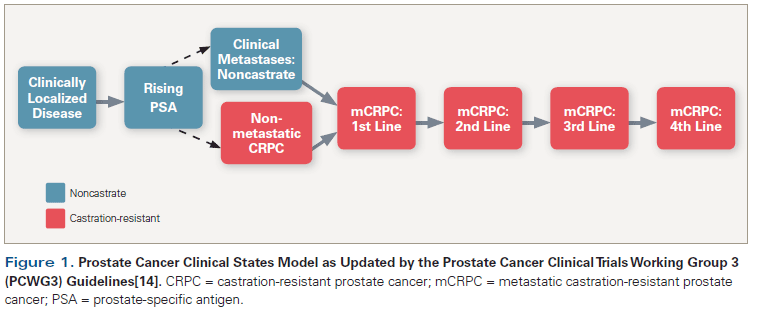





















































The great strength of the PCWG3 is the recognition that second- , third- , and fourth-line treatments offer new possibilities for extending overall survival.
The great strength of the PCWG3 is the recognition that second- , third- , and fourth-line treatments offer new possibilities for extending overall survival.
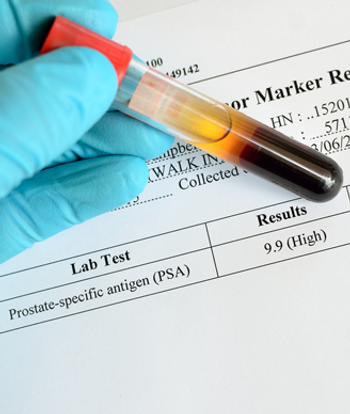
The 2012 change in guidelines regarding PSA testing for prostate cancer had a different effect on testing rates depending on which physician specialty was doing the testing.
Combined use of systematic and targeted magnetic resonance-ultrasound–guided fusion biopsy was effective in diagnosing clinically significant prostate cancer.
More than 15% of men and women over the age of 65 may have received breast or prostate cancer screening not recommended by current guidelines.
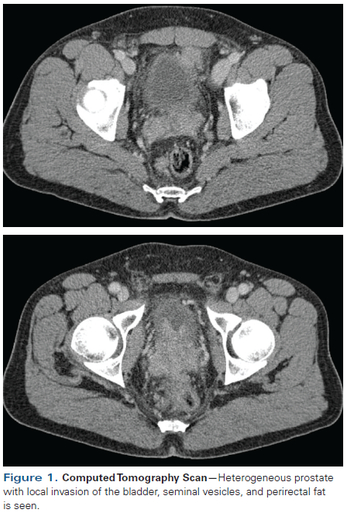
A 55-year-old Hispanic male presents with a family history of gastric cancer in one sibling and prostate cancer in an older brother. CT performed in March 2015 for IMT surveillance showed a heterogeneous prostate with local invasion involving the bladder, seminal vesicles, and perirectal fat.
BRCA mutations and co-occurring gene alterations in prostate cancer suggest that some patients might benefit from oral poly (ADP-ribose) polymerase (PARP) inhibitors.
Results from the large STAMPEDE trial suggest that the combination of zoledronic acid and celecoxib along with standard of care could improve failure-free survival in prostate cancer patients starting hormone therapy whose disease has metastasized.
A three-arm trial found that one hypofractionation radiotherapy regimen was non-inferior to conventional RT for intermediate-risk prostate cancer patients.
A hypofractionated radiotherapy regimen was found to be noninferior to conventional fractionation for low-risk prostate cancer patients in a new randomized phase III trial.

Men who take aspirin regularly may have a lower risk of dying from prostate cancer, according to results of a large observational study.
Prostate cancer patients who have a more heterogeneous set of detectable circulating tumor cells are more likely to develop resistance to anti-androgen therapy, according to the results of a new study.
A meta-analysis found that radiotherapy for prostate cancer is associated with worse overall and prostate cancer–specific survival compared with surgery.
In this review, we describe the historical data for chemotherapy in the perioperative and metastatic prostate cancer settings, and the recent trials that are changing the paradigm in support of docetaxel in the upfront setting.
Although great therapeutic advances have been made in metastatic castration-resistant prostate cancer, the role of systemic approaches in the management of patients outside of metastatic castration-resistant prostate cancer remains largely undefined.
Men with prostate cancer who carry variants in the SLCO2B1 gene have shorter time to progression and overall survival.
Men diagnosed with prostate cancer who opt for active surveillance/watchful waiting rather than active treatment may not be receiving quality monitoring of their disease.
Following the USPSTF recommendation in 2012 against routine PSA screening, rates of screening and the incidence of early-stage prostate cancer have both declined.
Researchers have developed a blood test that can identify mutations in the androgen receptor gene that drive resistance to abiraterone. The test could identify prostate cancer patients who will not respond to the treatment.
For men with prostate cancer undergoing radiation therapy, consumption of men’s health supplements are unlikely to prevent adverse events, metastasis, or cancer-related death.
Hypofractionated radiation therapy appears to lead to similar efficacy and safety as a standard radiation therapy regimen for men with low-risk prostate cancer.
The use of bone-seeking radionuclides effectively controlled bone pain in men with prostate cancer metastatic to the bone, according to the results of a systematic review.
A new meta-analysis suggests that survival outcomes are similar with intermittent and continuous androgen deprivation therapy, and that intermittent therapy may improve some quality-of-life criteria.
Six months of radiation therapy combined with ADT for prostate cancer may not produce a survival benefit in men with moderate to severe comorbidities.
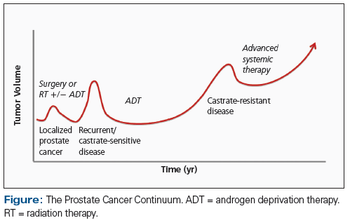
There is ample evidence suggesting that physical activity and exercise can be therapeutic tools for patients with prostate cancer. Patients diagnosed with localized disease should be advised to stay physically active; furthermore, patients who are undergoing radiation therapy and/or treatment with ADT appear to benefit from regular aerobic and resistance exercise to alleviate side effects.
Men with low-risk prostate cancer monitored by active surveillance are not likely to have their disease spread to other organs or die of their prostate cancer.