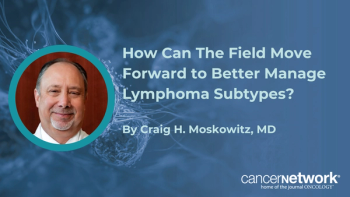
Combining ctDNA and modern imaging with novel therapeutics may help determine subsets of patients who are eligible to receive reduced treatment courses.
Combining ctDNA and modern imaging with novel therapeutics may help determine subsets of patients who are eligible to receive reduced treatment courses.

Orca-T may facilitate faster immune reconstitution in patients who undergo allogeneic transplant, according to Wendy Stock, MD.
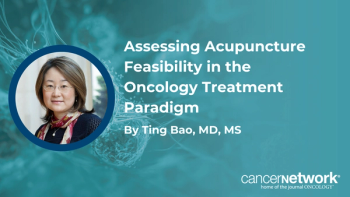
Ting Bao, MD, MS, suggested chemotherapy-induced neuropathy could be mitigated through acupuncture, although phase 3 clinical trial results are pending.
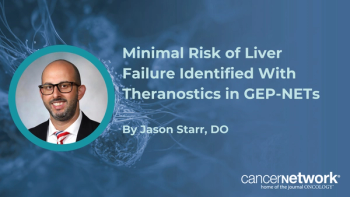
An analysis conducted by Starr and associates showed that patients with high disease burden in the liver did not experience liver failure with PRRT.
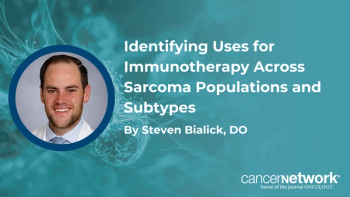
Microsatellite instability-high status may make patients suitable candidates to receive agents like pembrolizumab, according to Steven Bialick, DO.
Data from the EMPOWER-Lung 1 study reinforce the value of long-term immune checkpoint inhibition in PD-L1–high non–small cell lung cancer.
Alexander Z. Wei, MD, identified key abstracts in bladder and kidney cancer to optimize treatment in select patient groups.

In this segment, the panel further examines the case of a patient with EGFR mutated metastatic non-small cell lung cancer and asymptomatic brain metastases.
In this case based segment, Dr. Devarakonda introduces a newly diagnosed 62 year old patient with EGFR exon 19 deleted metastatic non-small cell lung cancer and asymptomatic brain metastases.

In this closing segment, Dr. Alexander Spira and Dr. Edward Kim reflect on key takeaways from the patient case discussions, with a focus on the importance of early and comprehensive biomarker testing in early-stage EGFR-mutated non–small cell lung cancer (NSCLC).
In this segment, Dr. Alexander Spira and Dr. Ticiana Leal discuss how to approach the transition from neoadjuvant therapy to the adjuvant setting in early-stage EGFR-mutated non–small cell lung cancer (NSCLC).
In this segment, Dr. Alexander Spira and Dr. Natalie Vokes explore the impact of neoadjuvant targeted therapy on surgical planning and outcomes in early-stage EGFR-mutated non–small cell lung cancer (NSCLC).
In this segment, Dr. Alexander Spira and Dr. Edward Kim discuss which outcomes are most clinically meaningful when evaluating neoadjuvant targeted therapy in early-stage EGFR-mutated non–small cell lung cancer (NSCLC).
In this segment, Dr. Alexander Spira introduces a second patient case involving a 62-year-old woman with resectable stage IIIA EGFR-mutated non–small cell lung cancer (NSCLC), where the mutation was identified from an initial biopsy.
In this segment, Dr. Alexander Spira and Dr. Edward Kim discuss how to counsel patients who are hesitant to continue adjuvant therapy despite feeling well in early-stage EGFR-mutated non–small cell lung cancer (NSCLC).
In this segment, Dr. Alexander Spira and Dr. Ticiana Leal discuss strategies for monitoring and managing treatment-related adverse events over time in patients receiving adjuvant therapy for early-stage EGFR-mutated non–small cell lung cancer (NSCLC).
In this segment, Dr. Alexander Spira and Dr. Natalie Vokes discuss how to effectively counsel patients on completing the full course of adjuvant therapy in early-stage EGFR-mutated non–small cell lung cancer (NSCLC).
In this segment, Dr. Alexander Spira and Dr. Edward Kim discuss key considerations in selecting patients for adjuvant targeted therapy in early-stage EGFR-mutated non–small cell lung cancer (NSCLC), particularly those with multiple comorbidities.
In this segment, Dr. Alexander Spira introduces the first patient case scenario, focusing on a 72-year-old man with resected stage IIB EGFR-mutated non–small cell lung cancer (NSCLC) who has completed adjuvant chemotherapy and is considering further treatment.
In this segment, Dr. Alexander Spira and Dr. Ticiana Leal discuss variability in treatment selection for early-stage EGFR-mutated non–small cell lung cancer (NSCLC) and strategies to promote guideline-aligned care. Dr. Leal highlights that despite clear recommendations, differences in practice patterns persist, particularly in community settings.
In this segment, Dr. Alexander Spira and Dr. Edward Kim focus on the importance of adverse event management in patients receiving adjuvant EGFR tyrosine kinase inhibitors for early-stage EGFR-mutated non–small cell lung cancer (NSCLC).
In this segment, Dr. Alexander Spira and Dr. Natalie Vokes discuss how to effectively counsel patients starting adjuvant EGFR tyrosine kinase inhibitor therapy in early-stage EGFR-mutated non–small cell lung cancer (NSCLC).
In this segment, Dr. Alexander Spira is joined by Dr. Ticiana Leal, Dr. Edward Kim, and Dr. Natalie Vokes to discuss clinical decision-making around neoadjuvant therapy in early-stage EGFR-mutated non–small cell lung cancer (NSCLC).
In this segment, Dr. Alexander Spira and Dr. Ticiana Leal focus on the importance of multidisciplinary coordination in managing early-stage EGFR-mutated non–small cell lung cancer (NSCLC).
JNJ-1900 may avoid the main limitations observed with other radiosensitizers and radioprotectors, according to Benjamin Cooper, MD.
In this segment, Dr. Alexander Spira and Dr. Edward Kim discuss the critical role of early and comprehensive biomarker testing in the management of early-stage EGFR-mutated non–small cell lung cancer (NSCLC).

Mina Fam, MD, discussed his use of MRI and genomic testing to inform his use of HIFU focal therapies vs more radical alternatives.
Jamin C. Morrison, MD, discussed the shift toward personalized cancer vaccines in melanoma.
In this segment, Dr. Alexander Spira and Dr. Natalie Vokes examine how outcomes with adjuvant EGFR tyrosine kinase inhibitors translate from clinical trials into real-world practice in early-stage EGFR-mutated non–small cell lung cancer (NSCLC).