
Frank McCormick, PhD, FRS, DSc (Hon), discussed how RASolute-302 data showing daraxonrasib nearly doubled survival reshaped pancreatic cancer drug development.
Frank McCormick, PhD, FRS, DSc (Hon), discussed how RASolute-302 data showing daraxonrasib nearly doubled survival reshaped pancreatic cancer drug development.

Stay tuned for an in-depth discussion on navigating operational workflows and mitigating barriers to access for CAR T-cell therapy in multiple myeloma.

The regulatory decision for subcutaneous amivantamab in recurrent/metastatic head and neck squamous cell carcinoma was based on phase 1b/2 OrigAMI-4 data.

Two hematologic oncology experts discuss operational and referral workflows, as well as barriers to access for CAR T-cell therapy in multiple myeloma.

Selinexor maintenance therapy did not significantly improve PFS vs placebo in TP53 wild-type advanced or recurrent endometrial cancer in a phase 3 trial.

Kay Yoon-Flannery, DO, MPH, FACS, discusses da Vinci Single Port robotic mastectomy, ranging from technique and patient selection to outcomes.

Kay Yoon-Flannery, DO, MPH, FACS, explained how the da Vinci Single Port 3D visualization improves precision vs open or multiport surgery.
Zahra Mahmoudjafari, PharmD, BCOP, FHOPA, MBA, predicts operational challenges as CAR T-cell therapy expands to non-oncology indications.
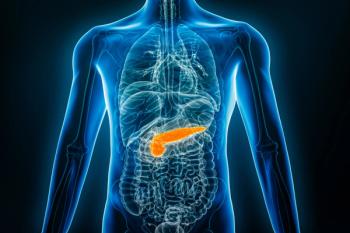
Frank McCormick, PhD, FRS, DSc (Hon), discussed his vision for preemptively treating KRAS-driven precancerous lesions, differences between KRAS allele subtypes, and where the field is headed over the next decade.

The FDA's CTGTAC voted 10-3 in favor RP1 plus nivolumab's benefit-risk profile in anti–PD-1–resistant advanced melanoma.
The UAE granted marketing authorization for nogapendekin alfa plus BCG in BCG-unresponsive NMIBC and with checkpoint inhibitors in metastatic NSCLC.

Data from a phase 1 trial validate FcRH5 as a “good target” in multiple myeloma therapy, according to Adam D. Cohen, MD.

Adding mFOLFOX6 and bevacizumab to atezolizumab cut the risk of progression or death by 58% vs atezolizumab alone in dMMR/MSI-H metastatic colorectal cancer.

Cema-cel received RMAT and fast track designations for first-line consolidation therapy in MRD-positive large B-cell lymphoma based on phase 2 ALPHA3 data.
María Teresa Bourlon, MD, MSc, FASCO, discussed why early RadiCal trial closure and adverse effects outweigh secondary survival signals in bone-metastatic RCC.

Explore modern metastatic breast cancer care: longer survival, smarter symptom control, caregiver support, and steps to close racial treatment gaps.
María Teresa Bourlon, MD, MSc, FASCO, discussed data showing body composition and muscle loss with lenvatinib/everolimus vs cabozantinib in metastatic ccRCC.

In part 1 of a 2-part interview, Frank McCormick, PhD, discusses the technical hurdles that made KRAS resistant to drug development, the NCI's RAS Initiative, and the RASolute 302 data.
Data from a first-in-human phase 1 trial assessing ISM6331 in mesothelioma and other solid tumors will be presented at the ESMO Congress 2026.
Key genitourinary oncology updates emerged from ASCO 2026, focusing on balancing efficacy and AEs.
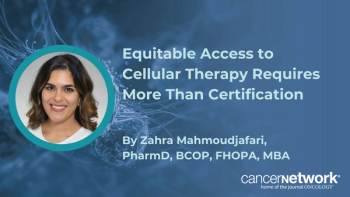
Zahra Mahmoudjafari, PharmD, MBA, BCOP, FHOPA, says equitable access to CAR T-cell therapy depends on partnership, not just center certification.
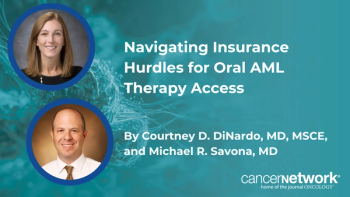
Michael R. Savona, MD, and Courtney D. DiNardo, MD, MSCE, discussed overcoming insurance barriers to oral AML treatment access.

Final phase 3 BOND-003 Cohort C results showed a 75.5% complete response rate with cretostimogene grenadenorepvec in BCG-unresponsive NMIBC.

Risvutatug rezetecan improved progression-free survival in the phase 3 ARTEMIS-011 trial for patients with relapsed osteosarcoma.

No adverse effects or injuries associated with the presence of particulate matter in 3 lots of injectable cyclophosphamide have been reported to date.
Clinicians “still don’t have the answer” on true toxicity thresholds, says Tiba Al Sagheer, PharmD, BCOP, BCACP, on CAR T-cell toxicity management.

As the FDA's ODAC prepares to weigh in ahead of an August 2, 2026, decision date, take a look at RP1's clinical trial and regulatory journey.

Approval of the SimpleScreen CRC test may increase earlier detection of colorectal cancer and improve patient outcomes.

Experts discuss how to properly select first-line regimens for EGFR-mutated NSCLC in the context of different clinical scenarios.

Sonesitatug vedotin met dual primary survival end points in the phase 3 CLARITY-Gastric01 trial in CLDN18.2-positive gastric/GEJ cancer.